GMBC ep22-Unveiling the Crescent Moon: A Dive into Saladin Ahmed's The Throne of the Crescent Moon
Speaker A
00:00:00.240 - 00:00:00.560
Foreign.
Speaker B
00:00:06.880 - 00:01:29.890
Welcome to the Game Masters Book Club where great fiction becomes your next great tabletop RPG experience. Behold Dom Swat, City of the Crescent Throne. A tyrannical king and an evil sorcerer.
It is also the home of Dr. Abdullah Max Loud, an aging ghoul hunter, his sword wielding assistant, his two old adventuring companions and and a magical shape shifting girl from the desert tribes.
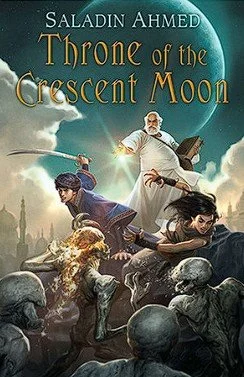
Tom Watkin, Martin Wilson and Rich Davies join us from the great continent of Australia to talk about this fantastical Middle Eastern city that never was in the Throne of the Crescent Moon by Saladin Ahmed. Let's get into the conversation.
Welcome to the Game Masters Book Club International edition, ladies and gentlemen, coming to you live not only from our headquarters here in Lowell, Massachusetts, but all the way across the globe in Australia to meet our new GMs for this book which is going to be Throne of the Crescent Moon by Saladin Ahmed. But before we get into the book, let's meet our fabulous Game Masters.
Rich, we're going to start with you, we're going to have you introduce yourself, tell us about your gaming experience and your favorite non Western European setting and or character you've played with in your role playing experience. Go Rich.
Speaker C
00:01:30.370 - 00:03:04.160
No worries. Hi Eric. Hi everyone. Yeah, sure. Gaming experiences started off in the 90s in high school, starting with second edition.
And I think my first sessions was kind of like playing the Dragonlance series with some of my buddies, older brothers. And it sort of started off from there and once I hit uni it was a bit of a university, it was a bit of a break.
Didn't play any D and D for a while, then maybe about 10 or so years ago picked it up again from this sort of nostalgia element and have sort of, it's really taken off since then. So I've gone from D and D to all sorts of different styles and systems.
So in terms of my favorite non European Western setting, I've just recently finished a couple of campaigns that I've run in the Eberron setting from D and D and I really like the sort of the, the Magitech sort of element. They've got the lightning rail, the sky towers, they got the Warfor. The style of adventuring is like fantasy, noir, hope style adventure.
So there's a different take on how to frame stories and there's also a different way of framing heritages and other species and things like that with, you know, not every orc is evil.
And so I sort of like that different take on just creatures and the different take on the regular D and D stuff and that setting was fantastic because that sort of set me off and looking at other experiences from D and D. So I've been heading into the sort of the OSR system since then. That was a good sort of setting for me. Really enjoyed that.
Speaker B
00:03:04.480 - 00:03:31.210
Fantastic. I'm actually headed into an Eberron campaign shortly with my long term group, so that's making me super excited.
I'm definitely playing some sort of guy who punches people, whether it be monk or barbarian, and I haven't figured out yet, but I'm just like going to be some street tough who hits people. That's my. I'm very excited. Moving to something a bit different.
Go ahead, Tom, why don't you tell the folks about your gaming experience and about your favorite non Western European setting?
Speaker A
00:03:31.210 - 00:05:16.470
Sure. So I'm Tom. Hi everyone.
I run the blog D and D at Work, which is all about Dungeons and Dragons and how you can learn leadership skills and the softer skills of the workplace through playing D and D. I started playing D and D when I was I think 8. My dad brought back the basic red book from the oil rigs.
He'd been playing with his friends on the rigs and brought it back home and we, yeah, we had, we had a go at home and that just like blew my mind and I've loved it ever since.
In terms of my favorite non European setting, in one of my long term campaign, which has been running for years, we went to a sort of Middle Eastern setting called the Caliphate, which was helped shaped by my players, Carol, one of the people in our group, her Tabaxi character is now living there as a sort of God. And so I've loved that Middle Eastern type setting.
But one of the most inventive settings I really love is called Veins of the Earth, which was written for Lamentations of the Flame Princess. And that's all about living underground. So it's not your stereotypical underd dark. It's all about sort of tight like spaces.
The, the smells and the tastes of the earth and then the things that live down there are all based on different sort of geologies. It's really inventive and it's really alien. It's very, very odd and it gives you a completely different flavor to your games.
I used it in D&D 5th edition, but you could use it for any system really. And it's just so out there and so different.
It gives your players like quite an interesting experience away from the sort of normal stereotypical Dungeons and Dragons setting.
Speaker B
00:05:17.510 - 00:05:23.950
All right, fantastic. Marty, you're up next. Tell everybody about yourself and your favorite setting.
Speaker D
00:05:24.180 - 00:07:15.300
All right. How you going? My name is Martin. Obviously my sort of start came junior school. Playing HeroQuest was probably the gateway drug for me.
Followed by Fighting fantasy. Beg your pardon. Choose your own adventures. And the Lone Wolf series.
And then going on to my brother brought home the Dungeons & Dragons second edition. Advanced Dungeons & Dragons second edition book. And I was just absolutely hooked from there. And I played a lot up until high school as well.
And I was too cool for D and D for a while before getting back into it a few years later. I played a lot of Pathfinder as well. We went pretty much straight from second edition to Pathfinder.
Missing everything else in between with a bit of Runequest and things in there as well. 3rd Edition rune quest and then 2nd Edition all the way to 5th Edition as well. So missed a lot of stuff in between.
But that's where I've sort of come from. And my favorite non European setting has got to be the Middle east setting. I've loved it. Lawrence Arabia, favorite movie of all time.
And Dune of course. I had a Dune graphic novel from the 90s based on the. The movie with Sting and I absolutely love that.
And my favorite character is from the Caliphate as well. Tom's game that he ran. I had a character called Kazim who was a ended up becoming an Eldritch knight which I absolutely loved playing.
One of my all time favorites. We just had some pretty wild adventures through there. So he ended up falling in love with a European lady through a message ring.
And he's now created his own world in a dried up lake. Own city. I beg your pardon? In a dried up lake. Which is just incredible. The stories you can make through play with your friends are.
Speaker B
00:07:15.300 - 00:09:55.130
Just phenomenal. That is awesome. That's fantastic. My name is Eric Jackson. I'm the host and been playing since the Pleistocene era.
And I currently running a campaign where I've focused most of my energy around a West African game. A lot of Yoruba culture in it. Trying to make. Trying to work on that.
And that's one of the things that I absolutely adore about Dungeons and Dragons or any role playing game is that if I decide I'm going to work on something, if I decide I want to, I want something that has a different kind of flavor. I will sit down and put my mind to it and do the research and really just kind of focus in. And I learned a lot.
I. I learned all of my Greek myths for school before everybody else because I was using them in D. And D I learned, I learned tons of stuff that people are like, how do you know that? And I'm like, well it was in a game once.
I'd also say that I recently got the Avatar the last airbender role playing game and I'm really looking forward to playing in that world as well. Okay, we are going to be going to a non western culture based book. That's one of the reasons why I was super excited to do this one.
I really have enjoyed this book a couple of times and so I'd like to introduce you all to the.
Not that you guys need an introduction because you already read the book, but to our audience I'm going to introduce you to the the Throne of the Crescent Moon by Salad Nahmed. And this is where Dr. Abdullah Maximil, the last real ghoul hunter in the great city of Dam Soat, just wants a quiet cup of tea.
However, despite him being three or more score years old, he's still not able to retire. He and his young assistant, the holy dervish Rasid are back on the monster hunting trail.
Along that path they gather up allies including Zamia, a holy were lion and the Doctor's old adventuring buddies, a wizard and an alchemist who are also an old married couple.
They face off not only against an evil sorcerer, his ghouls, his man jackal, shadowy lieutenant Maoa, but also everything the city Dom Swat can throw at them. Corrupt officials, rabble rousing thieves, petty and cruel religious cults.
All while trying to save the city itself and the rest of the world from a blood soaked destruction. This is a deeply engaging and detailed world created for this adventure in an Arabia that never was.
Salah Nahmed has created what I think is the perfect setting to run a game in a tabletop. Roleplay Exedic.
Speaker D
00:09:55.210 - 00:09:55.610
Comments.
Speaker B
00:09:55.930 - 00:10:05.210
Gentlemen. Perfect.
Does anybody have any comments about any themes that I missed that you want to be sure that folks know about the book before we get into mechanics? Marty, you want.
Speaker D
00:10:05.210 - 00:10:22.650
To go? Yeah. I don't think I've ever read a book that is has such detailed scenes about sitting down, drinking tea and eating cakes.
I think his description of sitting around with friends, having banter, drinking tea, eating spiced tea cakes is probably the most thorough I've ever read.
Speaker B
00:10:23.210 - 00:10:26.810
It's fantastic. That was, that was a feature, right? Okay. I just want to.
Speaker C
00:10:26.810 - 00:10:28.450
Be clear. Absolutely. A lot.
Speaker B
00:10:28.450 - 00:10:28.890
Of fun.
Speaker A
00:10:28.890 - 00:10:29.170
All.
Speaker B
00:10:29.170 - 00:10:30.170
Right. Yeah.
Speaker C
00:10:30.170 - 00:11:10.880
Anybody else? I felt the way that the factions were set up amongst the city was pretty well done.
We had the sort of the Caliph and sort of doing his own thing and making sure that life was good for himself and just sort of ignoring pretty much what the rest of the city was doing, even though they're sort of being oppressed.
And then of course, we had the Falcon Prince, which was a charismatic criminal, kind of like almost like a Robin Hood type of character, doing what he could for the downtrodden on the poor. So. And then of course we had the sort of the various thugs traveling through the city and I thought that was very.
The humble students, I think they were called. I thought that was a nice feature in.
Speaker B
00:11:10.880 - 00:11:13.400
The book. Absolutely agreed, 100%. Tom, any.
Speaker A
00:11:13.400 - 00:11:45.340
Other comments? Yeah, I loved the fact that it had.
The characters were old and in retirement and the younger characters, who were maybe the more heroic in the way they behaved, actually behaved in ways that were detrimental to their overall plan. So you had that sort of juxtaposition between the old and the young.
So the old sort of wise people who didn't maybe have as much energy, and then the young, impetuous, strong characters who were trying to do everything they could to help, but actually didn't always help the way they intended. I love that.
Speaker B
00:11:45.340 - 00:11:58.770
You don't. I agree. It's always. It's nice, particularly now that I am an older person reading these books. It's nice to see people.
It's nice to see the old people, you know, like. Yes, yes. You have lots of energy. That's lovely. Just wait.
Speaker A
00:11:59.330 - 00:12:03.890
Just wait. Exactly. Exactly. And then sit down and have a cup of tea and talk.
Speaker D
00:12:03.890 - 00:12:06.730
About it. I feel it's holding a mirror up to all.
Speaker C
00:12:06.730 - 00:12:07.770
Of us. And they were.
Speaker B
00:12:07.770 - 00:12:10.330
Reluctant heroes. Rich, what did you say?
Speaker C
00:12:10.330 - 00:12:45.669
I'm sorry? And they were reluctant heroes. There's sort of the Dawood and the letters and Abdullah.
They kind of didn't really want to be involved in all this sort of dangerous stuff in a way.
They just wanted to sort of have their, you know, have their tea and the just take it easy type of thing, not be involved in all this sort of death and destruction, so to speak. But having, you know, with their experience, having feeling like, oh, we have to do something here, this is something dangerous. But if they.
I guess if they had their choice, they wouldn't really be involved in all this. These sort of plots of rivers of blood and so forth. And who could.
Speaker A
00:12:45.669 - 00:12:46.070
Blame them?
Speaker B
00:12:46.070 - 00:13:06.140
Pretty reasonable. Yeah. Like, I would prefer not to be just, you know, attacked by crazy skin ghouls.
Speaking of being attacked and going on adventures, if you wanted to evoke the. This particular story and give it to your players. Tom, why don't you talk to us and tell us what system you would use.
Speaker A
00:13:06.140 - 00:14:12.630
And why? Thanks, Eric. So something I thought was prevalent throughout the book was that they weren't really heroic characters like they'd had their day.
They'd been heroes back in the day, but things were very, very dangerous. I thought, you know, that sort of stereotypical 5E type rules are a bit too heroic for this.
So my thinking was you want a system that's going to be threatening. Magic isn't. Magic's going to cause harm to you. I thought Cthulhu, Call of Cthulhu was the way to go.
And the Call of Cthulhu system or book that would most reflect, I think is Cthulhu Invictus, which is set in the Roman era. And I think you could probably port a lot of that through into this sort of fantastical Middle Eastern type setting.
You know, you have people losing their sanity. The characters are actually quite fragile. So it would be. It would sort of. I think that would encapsulate that non heroic nature of the book.
And I think, yeah, having sort of the magic system where you age, you could incorporate that quite nicely into Cthulhu Invictus. So that was my take.
Speaker B
00:14:12.630 - 00:14:18.910
On it. Agreed. I think it's definitely a magic system with costs. It's not something that.
Speaker A
00:14:18.910 - 00:14:19.070
Just.
Speaker B
00:14:19.070 - 00:14:25.700
Happens. Exactly. So, Rich, do you want to go next and tell us about what system you think would best evoke the Throne of the.
Speaker C
00:14:25.700 - 00:15:22.890
Crescent Moon? Yeah. Cheers, Eric. So there was one element I thought that was really well done and in fact a strong part of the novel. And that was the sort of the.
How the. The. The combat was very cinematic. It was fast, strong and deadly.
And it often left the characters in really quite a sort of a severely injured or affected state afterwards. It was kind of like they almost would die or be really maimed. And I thought the sort of.
The sort of the aspect of that, rather than like a D and D thing where there'd be like a, you know, roll to hit and then, you know, move on, miss, hit or whatever, and everyone else has a go over rounds and rounds. I thought Blades in the Dark were the sort of the.
The story driven approach to resolving encounters or fights or whatever the case may be, was a way better way to describe in a more cinematic way the combat. And it was a. Would be a better fit for how it was run through.
Speaker B
00:15:23.050 - 00:15:30.130
The novel. Again, absolutely agree, that does. The fight scenes are quite evocative and that would be a great way to show that.
Speaker D
00:15:30.130 - 00:16:20.870
Off. Marty.
The first thing that came to mind Very early in the book for me was to use the Down Darker Trails, which is also the Cthulhu system, but based in the sort of 1920s cowboy era. So the movie the Mummy came to mind.
So I imagined a group of adventurers coming to the Throne of the Crescent Moon to loot and pillage tombs for artifacts, and then coming across these ghouls and the Abdullah and Rased almost taking the role of the Medjai, sort of saying, oh, you know, these skin ghouls are around, it's not safe. And your characters. No, I'm not believing them. These strange superstitions and adventuring out into the wilderness.
Anyway, that's the first thing that came to mind.
Speaker B
00:16:20.870 - 00:16:22.910
For me. It all comes back to the.
Speaker D
00:16:22.910 - 00:16:24.430
Mummy. That's. It all.
Speaker B
00:16:24.430 - 00:16:28.470
Comes back. It all comes back to the Mummy. It's fantastic. You know.
Speaker D
00:16:28.470 - 00:16:28.910
It'S just.
Speaker B
00:16:29.150 - 00:17:39.980
Yeah, yeah. A fabulous cinematic moment. Yeah, yeah. I'm gonna take a slightly different turn. I felt very. I felt. I felt pretty heroic going through here.
I may be reluctant heroes, but definitely on the heroic side, which is why I think where if I were gonna run this, I would probably run this in Dagger Heart, I think Daggerheart has the two D12s for combat where you succeed with fear or you succeed with hope. And I felt like that was a deep driving force in almost every combat. Like, if you were successful, did you succeed? Because you were.
Just had to get away and you were. It was fearful or perhaps it was hopeful. I would like that to be emphasized in the play.
But if we wanted to go absolutely more towards the idea of successive damage to attributes, there's an OSR powered by the Apocalypse Apocalypse piece called the Nightmare Underneath. And I think it's really cool because there's more. Successive damage causes attribute damage, and it has rules for that.
And I really felt like our wizard character there was going through a lot of that as he was casting spells and stuff. So if you wanted to emphasize that, I think that's a. An interesting system to build off of.
Speaker C
00:17:39.980 - 00:17:55.540
As well. Yeah, that sounds fascinating because I think when Zamia was. Her soul was sucked by or drained from that sort of Maua creature.
I think that would be nice in terms of trying to reflect that by taking that sort of attribute damage. So that sounds like a good little system.
Speaker D
00:17:55.700 - 00:17:55.980
To.
Speaker B
00:17:55.980 - 00:18:25.570
Use. Yep. Something you could lift off and steal right out of that system if you wanted to, or use the whole game as it was.
And certainly way more satisfying than, oh, I cast lesser restoration and everything is fine. You know, that's definitely going to be Less. Less enjoyable. That's not going to give that same feeling of this game.
Marty, why don't we go on to talk about. Since we're already talking about stealing things, or as we like to say here, portable materials.
Is there anything portable in this book that you'd want to drop into your.
Speaker D
00:18:25.570 - 00:18:57.700
Next campaign? Yeah, absolutely. I love the character of Mawa or the shadow beast, the shadow of the man Jackal. I thought he was just absolutely awesome.
I love the way he spoke, sort of almost like a petulant child at times in this strange, eerie voice. Couldn't be hurt by natural means, making it very hard for the characters to.
To kill him and invoking a sense of fear, which is what I love when playing games these days is the characters thinking, I'm not going to make.
Speaker B
00:18:57.700 - 00:18:59.020
This out. Did you listen to.
Speaker D
00:18:59.020 - 00:19:47.960
The audiobook? I did for the last two chapters because I was on a long drive. So for the last two chapters I did. And he did a great job with the Maoir.
I thought he was bit high pitched because, you know, you have these things in your head when reading a book of how things are meant to sound. So I imagine a very deep, gravelly. I know it describes it as high pitched, but in my head that's how I had him, which I found a bit jarring.
You know, once you've got an image in your head and then it changes. For audiobooks and movies, that can be tough.
So I think Ma and Mao is a perfect character for Cthulhu or dark Cthulhu just because he's so powerful and your characters have got not many means of defeating him. So yeah, I think Mao definitely take him and the. The unclean. His servant. Who's. Whose name.
Speaker B
00:19:48.040 - 00:19:50.480
I forget. Oh yeah, I just remember he's.
Speaker D
00:19:50.480 - 00:19:53.440
The unclean. Yeah, the unclean one hit the opposite to the.
Speaker A
00:19:53.440 - 00:19:57.920
Dr. Abdullah. Marty, are we going to be facing them in the next session that we play.
Speaker D
00:19:57.920 - 00:20:01.320
With you? I'm not gonna say that I haven't already started writing something. Yeah.
Speaker A
00:20:01.320 - 00:20:01.640
So.
Speaker D
00:20:01.960 - 00:20:26.770
That. Awesome. So down darker trail. Looking forward to it. My first instinct for that.
But also Cthulhu dark, which is a great one page sort of rule system where combat is fatal for your characters. I also love that. So I've started writing one where your throne. You work in the. The throne of the Crescent moon.
Workers going down into the sewers to try and unblock it and then being hunted.
Speaker B
00:20:26.770 - 00:20:27.010
By.
Speaker D
00:20:27.010 - 00:20:29.690
Malwa. Nice. I think would make it great.
Speaker B
00:20:30.170 - 00:20:40.600
I'm excited. And your players. And your players sound a little frightened. So that's Always good. Tom, did you want to go next and talk about.
Speaker A
00:20:40.600 - 00:22:30.720
Your portables? Yeah, sure. There's a couple of things. The first one is the plot device.
So the very first opening of the book, you don't meet any of the main characters. You're sort of finding this poor old captain of the guard who's been put in a box and is being tortured by the big baddie.
And I think that's a great device to use in your game, especially if you're setting up a longer campaign, is to run a separate game where maybe the big bad guy is introduced in a different way than perhaps the player characters. You give them some pre generated characters characters and they get basically destroyed by the.
The big baddie to sort of set up the power level of the, of the bad guy and set up some of the background, but the players are actually in it.
Another idea there is, I've heard of someone who did it where they set up the pre prologue game where the queen had to be assassinated, but you didn't know by who. So each of the characters were trying to assassinate the queen and then that the outcome of that game then shaped the main campaign to come.
So I think that's something that you can really port in.
The other thing, just talking to Marty, talking about the unclean one is something I liked, is you had the main good guy, the doctor whose robe was always white and spotless. Then you had the main bad guy, the great unclean one whose robe was never clean.
There's something there about when you set up your NPCs or your villains just to have something very distinctive about them. So if they've got really, really dirty clothes, that's something that the players can latch onto.
So it's to have like a one thing that really makes them distinct and that can be the way they look, it could be the way they talk. But there's, there's something there that people can latch onto so they can then sort of remember, sort of get an association with that character.
And that can be for villains, but it can also be for, you know, key NPCs within the story. So I think that they're two things that you can really take.
Speaker B
00:22:30.720 - 00:22:31.160
From it.
Speaker C
00:22:31.160 - 00:22:41.980
Go rich. So I really liked in how the throughout the story they have the city. Dumbass. What? Sorry, let me say damn Sawat.
Speaker B
00:22:42.380 - 00:22:46.740
Not dumbass. You know, your players will immediately call.
Speaker C
00:22:46.740 - 00:22:47.260
It that.
Speaker B
00:22:48.380 - 00:22:50.540
Yeah, exactly. Oh, we're going.
Speaker C
00:22:50.540 - 00:24:42.020
To go.
The flavor of the city is sort of soaked through, through the novel, the protagonists, the characters, they're always Sort of bumping into, you know, whether the sights or the smells of the city that. The experiences, whatever quarter that they seem to be going through. And of course the.
The humble students that sort of, you know, they have interactions with.
So I felt that when I've run some of my campaigns or adventures, I sort of set the scene nice and clearly, but kind of forget to sort of really emphasize those sort of flavor of the. The setting or the situation.
So I was kind of thinking what I would do from now on is maybe my next adventure is have maybe like a list of the sort of the. The unique flavors of the setting or maybe of the. The particular situation and maybe either write that down or maybe have that in the.
The back of my mind. And so in preparing for a module or, sorry, the.
The next adventure or the next session, it would be kind of having those sort of elements that I'd want to include, like the specific flavors of the setting or the twist that I have for the particular game to ensure that when we're playing, that element comes up again. And so I just started a campaign doing in Cloud Empress, which is inspired by Studio Ghibli's Nausicaa, the Valley of the Wind.
And so I've got a couple of things there that I just want to infuse from time to time, whether they're going through the settlements or dealing with encountering one of the bugs in the adventures. Just sort of making sure that that unique flavor is it described all through the sort of the sessions and the campaign.
So I thought that was really well done in the book. And I want to. I'm inspired to do that for my next. My DM.
Speaker B
00:24:42.020 - 00:25:03.820
My GMing.
And you could really take what you did with the mechanic section where you were talking about Blades in the Dark and bring in the clocks from Blades in the Dark on that and can have each of your groups have their own thing going on. And does that clock move? Does it not move? And. And keep your characters on their toes as those things are happening. I think that'd work.
Speaker C
00:25:03.820 - 00:25:36.950
Really well. Absolutely. So Cloud Empress is kind of like a hex crawl. And you know, that's set up where there are these interactions in each of the hexes.
And I could just sort of imagine.
That's such a good point, Eric, that we could have the group encounters like bugs feeding or kind of like maybe just sort of interacting with another faction and so trying to sneak past or the.
The characters could maybe try to calm them down or run away and they could have that clock there that could be used to see if the characters actually do that in that situation. So, yeah.
Speaker D
00:25:36.950 - 00:25:43.670
Awesome idea. I really like that clock system. I think it's fantastic. We used that for. You used it, didn't you, Tom.
Speaker C
00:25:43.670 - 00:25:45.150
Soulkire campaign?
Speaker A
00:25:45.150 - 00:25:47.270
Yeah, absolutely. Yeah. When we were doing a lot of.
Speaker C
00:25:47.270 - 00:25:55.280
Heists. Yeah. And the flashback as well that you used, Tom, that was. That was superb. In a Gutter Rats campaign. That was really well.
Speaker A
00:25:55.280 - 00:26:19.830
Done too. Yeah, it works well. So, Eric, the flashback is where you.
You give your players each a flashback where they can jump back in time and have prepped something for whatever they're doing for their heist or what have you. Takes a lot of improv on the part of the GM to incorporate it, but it works. It works really well.
It sort of prevents all that over the top planning that sometimes happens in RPGs and lets the players just run.
Speaker B
00:26:19.830 - 00:26:25.270
With it. Oh, yeah, it definitely takes away that. Oh, the whole session ended up planning the heist. And we didn't do anything. All.
Speaker A
00:26:25.270 - 00:26:25.630
Game.
Speaker B
00:26:26.190 - 00:27:02.410
Right? Exactly. We played a Firefly game once. And the Fate.
That Fate system in particular, the Firefly rpg, has that built in where you can reference previous. They refer to it obviously, since it's based on the Firefly TV show, previous episodes.
So you can actually reference a previous episode and get like, you know, like they do in Marvel, where like the Black Widow and Hawkeye are talking. It's like this is just like Budapest, you know, like. And. And that just immediately brings the Flash back in and we see how they're all.
Okay, we know what we're doing because we just planned it out. But the Firefly system has that built into its mechanics. So that's. That sounds.
Speaker D
00:27:02.410 - 00:27:33.480
Really cool. Along with the clock system, I've used whiteboards. And then you.
You tell the players what's going to happen, then you give them 10 seconds to write down what they do on their whiteboard. I can't show everyone else. And then you reveal. And it's.
It really gives a sense of chaos because some people will go left, some people go right, some people attack if some people run away. And I think that sort of sense of chaos, you don't have the time to plan as a table about your combat. Really worked really well, I think.
I really like that system.
Speaker B
00:27:33.480 - 00:27:33.760
As.
Speaker A
00:27:33.760 - 00:27:57.270
Well. Awesome. Yeah, that worked really well. And it created a sense of everything being frantic and no one really quite knowing what was gonna happen.
It was brilliant. It was really. It really created that. That chaos. And as a player, you really felt it. It was. It was great. It was Great. Yeah, definitely.
It created a scene of panic, which is you don't get very often. It.
Speaker C
00:27:57.270 - 00:28:31.740
Was brilliant. What that sort of taught me.
At least, you know, when you think 10 seconds with, you know, like, regular D and D or whatever the case may be, you kind of, like, you can mull things over. And once you're sort of restricted to 10 seconds, you think, oh, my God, this is almost impossible.
After a few rounds, you sort of realize, well, I can't get too fancy with this. I just have to do something.
And so the writing was getting almost illegible on the whiteboard, at least for me, but it was kind of like, really simple. I'm not having grand plans here. I'm just kind of run, fight, duck, or whatever the case may be, in sort of training players on how.
Speaker B
00:28:31.740 - 00:29:21.170
To think. Fantastic. This is paying dividends, gentlemen. Everybody out here is getting a full education for their future games.
My portable piece is the Cobra Throne.
I love a giant set piece, particularly one that rises up into the ceiling and moves around and has a massive power, and nobody really understands how it works until the last minute. You can use it to end the world or not, and how does it happen and what sort of sacrifices have to be made? I just find when you.
And also the characters can't just pick that up and put it in their pocket. So really, you know, when it's anchored.
When it's a big piece and it's anchored to a place and it's the one thing they can do at this one time, the Cobra Throne, for me, really sold that. That makes for an excellent end of session or end of series of sessions moment. And I thought it.
Speaker D
00:29:21.170 - 00:29:21.650
Was great.
Speaker A
00:29:22.050 - 00:29:53.600
Absolutely. Yeah. There's something there, isn't there, about having big decisions at those points in the game where.
And I like doing this with my games where I like the players to have a real impact on the world. So, you know, you have that. That sort of item, and it can make them rule the world, or they could destroy it or whatever.
And rather than having a set outcome, you say, okay, players, you've got to take this really difficult decision. Which one are you going to go for? And then see what happens.
And sometimes they'll destroy your world, and sometimes they'll save it, but it's an exciting outcome.
Speaker B
00:29:53.600 - 00:29:53.880
Either.
Speaker D
00:29:53.880 - 00:29:56.560
Way. Absolutely. And sometimes they'll do something you never.
Speaker B
00:29:56.560 - 00:30:28.770
Prepared for. That's the standard. Oh, that's all the time you're gonna do. What? Why are we having cucumber sandwiches now? This is strange. Oh, my goodness.
Tom, we're going to move into our next section, and we're going to talk about things that inspire us. If people really like this, and this was the game or the book or the style they wanted to emulate in their game, what other media?
Books, movies, videos, whatever. What is it that you would recommend to the folks.
Speaker A
00:30:28.770 - 00:31:56.600
For inspiration? Okay, perfect. So I don't think I've got as much as you guys.
Marty's already mentioned it, But June, I think, is a great way to capture that sort of Middle Eastern flavor, but in a futuristic setting. Either the new movies or the books. Then you've got.
There's a graphic novel series called Fables, which I really love by Bill Cunningham, which is about fairy tales who are alive and living in New York. One of the series is called 1001 Nights of Snowfall, which has taken the Arabian Nights, 1001 Nights, and sort of put a modern twist on it.
I think that captures the. This sort of setting and. And feeling in a really good way.
And then lastly, one of my favorite authors is Joe Abercrombie, who writes quite grim, dark writing fiction, fantasy fiction. But his the Blade, the First Law trilogy, I think it's the second book. They go to Middle Eastern sort of flavored city and it's under siege.
And just the description of the city and then you've got some. Some majors down there who've got that sort of flavor. It's fantastic.
And I pulled a lot of inspiration for my Caliphate campaign, which I mentioned near the beginning, from that series of books. They're all brilliant. It's a brilliant read.
I think anyone who loves fantasy, but these sorts of characters who aren't massively heroic or they're in real danger all the time, I think they'd love the Joe Abercrombie books there. You can't beat them. So, yeah, the first Lore trilogy is the one I'd recommend to start.
Speaker B
00:31:56.600 - 00:32:01.080
Off with. Definitely a prime example of grim, dark and very.
Speaker A
00:32:01.080 - 00:32:05.400
Good writing. Yeah, amazing. Yeah. So glad I discovered.
Speaker B
00:32:05.400 - 00:32:07.920
His work. Rich, would you like to talk about your.
Speaker C
00:32:08.000 - 00:34:35.650
Inspirational material? Yeah, sure.
Following off from the sort of the theme about the city being a sort of character, and also in the general sort of theme of the population of the city being sort of dark creature or there's something going on with deaths and trying to find out what's happening there, I would like to recommend Perdido Street Station by China Miaville.
That was published in the 2000s, I think a little while ago now, but that essentially is sort of a band of ragtag adventurers trying to solve a mystery. Where victims, their consciousness is being drained away and then trying to find out what's actually going on there.
It's set in this city called New Crobazon. It's kind of like almost like a dark steampunk gothic style. And so you have factories belching pollution, you have the sort of.
The corrupt city officials the characters have to deal with. There's class tensions boiling throughout the city. And the city is sort of built on these sort of bones of some sort of ancient behemoth or creature.
And I thought that match in some sort of way the sort of the feeling that was set in the novel. The, the other inspiration. And this was a bit of a long bow to draw, to be honest. Maybe I'll set my case up first.
So I think the Throne of the Crescent Moon there is the ghouls. The reader first encounters them. You don't really know what they're about. Obviously evil, they're magically generated. They don't bleed the blood.
They've got this grave dirt or worms or maggots that come out of them when they're sort of cut to pieces or. And there's different types.
And so there's information about these ghouls that are sort of drip fed to the reader as we go along and we sort of gradually build a better understanding of what's actually going on. Like you start off saying are these zombies or some sort of golems or something like that? And so that's really well done.
And so that sort of what's inspired me from that is using the Alien movie. I thought that the way that the society suspense is sort of driven up through the novel.
But then also of course with Alien as you know, you start learning about the, the face huggers. And then there's the, the birth of the juvenile xenomorph. As a xenomorph starts moving through the.
The ship, it starts taking or killing off the crew and you sort of see more and more of the xenomorph until there's maybe a grand reveal right at the end with the sort of the Face off with Ripley. I. I thought that was really well done. So that's kind of the way that they were set up in.
Speaker B
00:34:35.650 - 00:35:03.990
The novel. That was on my list of things besides the Cobra Throne to mention. So thank you for bringing that up.
I love the types of ghouls in that we were always guessing which is something you always want to do with your combats. If you have goblins the first time, you've got to have goblin bombardiers the next time. And then Goblin berserkers.
It was always different, even though we were facing the same bad guy and his lieutenant. But all of the ghouls were different all the time. And I thought that was just Chef's.
Speaker C
00:35:03.990 - 00:35:04.230
Kiss.
Speaker D
00:35:04.230 - 00:35:04.630
Perfect.
Speaker C
00:35:04.710 - 00:35:08.070
Absolutely. Yeah. It was one of the most enjoyable parts of the novel.
Speaker D
00:35:08.070 - 00:35:19.750
For me. I really liked that. Most of the population had never seen a ghoul before either, or they didn't really know.
Even the Falcon Prince had never sort of come across a ghoul before. And so they really were this mythical, unknown.
Speaker B
00:35:19.910 - 00:35:27.270
Thing almost. People didn't believe that they actually even existed. And here they are tearing people's faces off. Marty, I think you're next to.
Speaker D
00:35:27.270 - 00:36:36.560
Go. Right. So I've already mentioned some of my. Unfortunately. So the Mummy, definitely, for me, that was the first thing that came to mind. The 1999 movie.
I just thought straight away about the Mummy. About the Egyptian or Middle Eastern setting with some unknown dark force working in the background.
And also the thirteenth Warrior, another movie getting a group of people together to go and combat this threat that's been eating people and no one knows what they are along with that. The Eaters of the Dead, the book that was based on. And for books.
There's a book called Thousand Names by Django Rexler, which is set in the sort of musket era about a group of people holding down an old fort and then coming across these sort of magical beings fighting back with the opposing Middle Eastern forces. Which was. Is really great and I can highly recommend it for a bit of pulpy fantasy. So, yeah, that'd be my three picks.
I also think Tom's mentioned it with Dune, but I think just the Dune soundtrack slowly in the background would fit as well. I think it's one of the greatest soundtracks ever written. It's sort of ominous and slow, which would be quite a good sort of setting sound.
Speaker C
00:36:36.560 - 00:36:56.070
I think. I was just listening to the soundtrack last night for the Dune movie by Hans Zimmer. That is incredible. It is such sort of a mood generator.
The sounds and the sort of the are so unique and evocative and it's something I associate. There's only Dune. There's nothing that comes close.
Speaker B
00:36:56.070 - 00:39:05.740
To that. I'm going to throw out A Master of Djinn by P. Djeli Clark as one of my recommendations.
This is a more modern piece as opposed to the sort of ancient city, ancient Arabian city. This is more of a post World War I sort of thing.
But it does have Djinns and world gets destroyed and Reluctant heroes and interesting alliances and city officials working against you. So it's got all of those little pieces. And I love PJ Lee Clark. I think he's an amazing writer. So that would be my first one.
My second one isn't one I previewed with you guys in the pre show because I thought of it afterwards. And that is a book called Iron dawn by Matthew Woodring Stover.
It's from the 90s, so it's from a while ago, but it's set in the aftermath of the Trojan War and it takes place in Northern Africa in the city of Tyre. And there's a. There's an evil necromancer who's threatening to unleash an army of the undead.
And there's a bunch of experienced characters that we don't have as much of. The young people versus old people thing. It's all sort of like deeply experienced adventurers when this one happens. But it really is pretty close.
I thought of it last night, so I was like, oh yeah, I gotta add that in. So that one is definitely probably the closest.
And I'll throw in Demon Drums by Carol Severance, which doesn't take place in Arabia at all, but takes place in Polynesia, but also has a lot of this undead army, people, people trying to stop it, experienced adventurers, all that great stuff. So that would be my third one.
The Polynesian demon drums, the 19 teens, Master Gin by Pjelly Clark and Iron Dawn Post Trojan War by Matthew Woodring Stover. That brings us here to the last part of our discussion. We have told the people how to play in the Throne of the Crescent Moon.
We have told them what would be good for their games. We've told. We've been told them how to inspire themselves. You guys do things other than run games and have things that you want to talk about.
So this is our promo section and we'll start with Tom, because Tom has the easy one. So Tom, why don't you tell us about your. The things you want.
Speaker A
00:39:05.740 - 00:40:11.980
To promo. Oh yeah, it's quite straightforward. Thanks, Eric.
So I've been writing a blog for the last couple of years called D and D at Work, which is all about leadership, culture and games of D and D. So. Or other role playing games. So it's basically how you can use role playing games to really hone your leadership or communication skills. So.
So I had this moment where I was sitting in a meeting, I was chairing a meeting at work and I was going around the table making sure everyone was in involved. I was making sure. Everyone had something to say and could input into the decisions we were making.
And I had this sort of epiphany that was actually like games mastering. The parallel was almost. It was uncanny.
You know, you're sitting at a table with your players making sure everyone's getting involved, everyone's enjoying themselves and everyone's having input into the story. So I thought, right, I'm going to explore that more.
So yes, it's D and D at work and I explore those sorts of themes as well as looking at how to incorporate narrative into other games and just yeah, my general musings. So yeah, I'd love. Your listeners are interested in that sort of thing. They could check it out. So.
Speaker B
00:40:11.980 - 00:40:24.000
It'S dnd@work.com. i've read a bunch of Tom's articles and it's absolutely brilliant. So I highly recommend for all gamers.
You should be reading the stuff that Tom says because he's a really.
Speaker A
00:40:24.000 - 00:40:24.720
Smart guy.
Speaker B
00:40:25.360 - 00:40:30.040
Thanks Eric. That's cool. Rich, what would you like to tell the.
Speaker C
00:40:30.040 - 00:41:07.860
People about? Yeah, thank you. A few weeks ago I went to my first DND con. It's Winterfest.
It's down in a little town about three hours drive from Perth, so it's not too far out of the way in Bridgetown. It happens every July. It's. It's cold, it's freezing, it was raining. But it was some great one shots that I ran.
It was 300 people participating over the weekend there. So you know, from I guess maybe WA standards, Western Australian standards, that's quite a lot and it was good to have that sort of community.
So my first time experience there, really loved it. So I'll be looking to go.
Speaker B
00:41:07.860 - 00:41:15.360
Next year. I don't know if I'll find myself in Western Australia in July, but if I am, I know where.
Speaker C
00:41:15.360 - 00:41:15.800
I'm going.
Speaker D
00:41:16.840 - 00:41:17.920
Oh, fantastic. More.
Speaker B
00:41:17.920 - 00:41:21.000
Than welcome. Excellent. Fantastic. Marty, you want to bring.
Speaker D
00:41:21.000 - 00:42:23.950
Us home? Yeah, sure. Mine is actually not D and D related but I'd just like to plug the Harry Perkins Institute here in wa.
They're a cancer research institution that we have here and every year they have fundraising for walk. They do a walk, women's cancer. They do a 200 kilometer bike ride and they do a swim as well, like a relay 200k swim or something like that.
I think it's 200ks. So they have these, all these events every year.
I take part in the Walk for Women's Cancer every year with myself, Rich and I have done it a couple of years in a row now and I just want everyone to sort of have a look at their local area and get involved in these sort of things. There'll be something similar in your country or your area and get involved and raise some money.
It's always better to raise money than donate because you can can raise $500 rather than donate 20 and it just gets you out in the community as well.
We as D and D players often get very insular and tucked away sometimes, so it's always good to get out and do some other things and raise some money for a great cause while we're at it. So the Harry Perkins Institute here.
Speaker B
00:42:23.950 - 00:42:29.990
In Australia. Fantastic. Everyone should be involved. And hey, drag your drag the rest of your gaming group along.
Speaker D
00:42:29.990 - 00:42:31.910
With you. Absolutely, yeah.
Speaker B
00:42:31.910 - 00:43:53.940
100%. Yep. And that was the Throne of the Crescent Moon by Saladin Ahmed.
Thanks so much to Tom Watkins, Martin Wilson and Rich Davies for an absolutely fantastic discussion.
They'll be back to talk about the award winning science fiction graphic novel series Saga by Brian K. Vaughan and Fiona Staples in a future episode, so stay tuned for more Australian commentary. You can find a complete transcript of today's discussion as well as links to all of our podcasts@k-squareproductions.com GMBC.
You can learn about upcoming episodes on our social media on bluesky, @gmbookclub, bluesky social on Facebook, @gamemastersbook club, on Mastodon amemmastersbookclub, and on Instagram amastersbookclub.
If you've enjoyed the show, please like subscribe and comment on our episodes in your channel chosen podcasting space and be sure to share those episodes with your gaming community. You've been listening to the Game Masters Book Club brought to you by me, Eric Jackson and K Square Productions.
Continued praise and thanks to John Corbett for the podcast artwork and Otis Galloway for our music. Next episode, George Krubsky, Eric Tricks and Marshall Smith return to discuss one of my personal favorites, the Goblin Emperor by Katherine Addison.
Later, gamers and to paraphrase the great Terry Pratchett, always try to be the place where the falling angel meets the.